
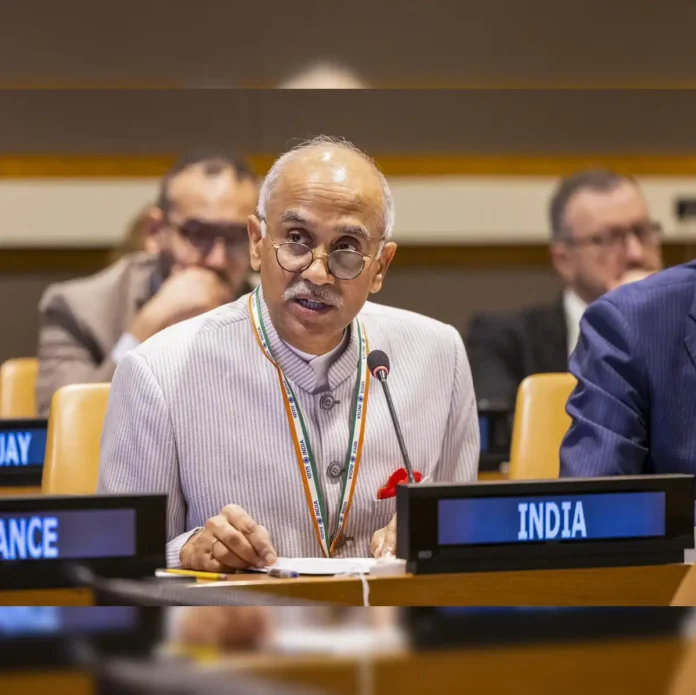
India has called upon the global community to prevent Lashkar-e-Tayyiba (LeT) and Jaish-e-Mohammed (JeM) from exploiting Afghan territory for terrorist activities. During a recent UN Security Council meeting, Indian envoy Parvathaneni Harish underscored the importance of coordinated international efforts against these UN-designated terror entities.
The Permanent Representative to the UN made these statements on Wednesday, highlighting India’s ongoing vigilance in monitoring the security dynamics of Afghanistan. The need for transformative actions in counter-terrorism was a focal point of discussions.
Why Coordinated Action is Crucial Against Terrorism in Afghanistan
During his address, Harish emphasized the need for collaboration among nations to eliminate terror threats, particularly from groups like LeT and JeM, which have roots in Pakistan. He insisted that efforts must not just be punitive but also constructive, promoting peace and stability in the region.
“Entities and individuals designated by the UN Security Council—including affiliates of ISIL and Al Qaeda—should not be allowed to operate in Afghanistan,” stated Harish, directing a clear message toward Pakistan’s role in harboring such entities.
India’s Commitment to Afghan Stability and Development
In discussing India’s long-standing ties with Afghanistan, Harish asserted, “India has a paramount interest in ensuring peace and stability in Afghanistan.” He described the historical relationship between the two nations, characterized by mutual cooperation and shared civilizational ties.
The Indian government believes that addressing the post-conflict situation in Afghanistan necessitates combining both positive incentives for constructive behavior and measures to deter negativity. “Focusing solely on punitive actions is unlikely to create the desired impact,” he pointed out.
Humanitarian Aid: India Leads Relief Efforts
In light of Afghanistan’s recent challenges, including a devastating earthquake, India has been proactive in delivering humanitarian assistance. The country was among the first to respond, providing 1,000 family tents and 15 tonnes of food for affected regions.
“As we extend our hand in compassion towards millions of Afghans suffering from poverty, disease, and hunger, our humanitarian assistance programs highlight our commitment,” Harish explained.
In addition to immediate relief efforts, Indian aid included 21 tonnes of essential medical supplies and support materials aimed at improving the living conditions of those impacted by the crisis.
Long-term Support for Afghanistan’s People
India’s support extends beyond humanitarian aid. Since the Taliban takeover in August 2021, India has supplied around 50,000 tonnes of wheat, 330 tonnes of medicines, and numerous other critical items designed to assist vulnerable Afghans.
“Our commitment to the developmental needs of the Afghan people is non-negotiable,” Harish reiterated, emphasizing initiatives focused on women and drug rehabilitation in partnership with the UN Office on Drugs and Crime.
“As we look forward,” he remarked, “India stands ready to support Afghanistan’s reconstruction through over 500 development partnership projects across various provinces.”
Future Engagement and Regional Cooperation
Reiterating the importance of collaboration, Harish concluded that India will continue its engagement with all stakeholders, supporting the international community’s vision of a stable, peaceful, and prosperous Afghanistan. The message was clear:
The need for focused and comprehensive strategies against terrorism and for humanitarian support is crucial for the Afghan people’s future.