Govt Cancels FCRA Licence of Sonam Wangchuk’s SECMOL
The Union Home Ministry has revoked the FCRA licence of SECMOL, led by Sonam Wangchuk, citing discrepancies in financial transactions and foreign fund regulations.
 Duggar Samvad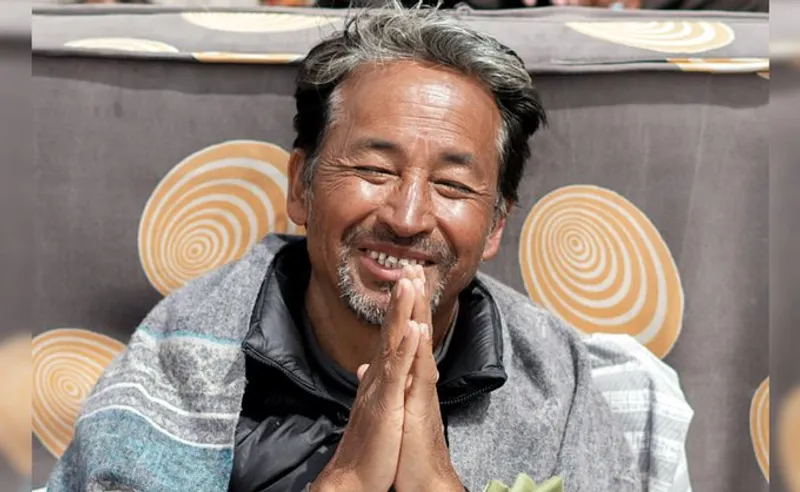
New Delhi, September 25: The Union Home Ministry has cancelled the Foreign Contribution (Regulation) Act (FCRA) licence of the Students’ Educational and Cultural Movement of Ladakh (SECMOL), founded by renowned climate activist Sonam Wangchuk. This order takes effect immediately, as the ministry outlined serious financial discrepancies within the organization.
The decision stems from alleged irregularities in SECMOL’s accounts, including a controversial fund transfer from Sweden, which the ministry deemed contrary to national interests. SECMOL previously received permission to accept foreign contributions for cultural and educational activities, but these allegations have prompted a reassessment of its operations.
Furthermore, SECMOL is not the only organisation led by Wangchuk facing scrutiny. His other initiative, the Himalayan Institute of Alternatives Ladakh (HIAL), is currently under investigation by the Central Bureau of Investigation (CBI) for potential FCRA violations.
The ministry had previously issued a show-cause notice to SECMOL, requesting clarification on various financial irregularities. Reports indicate that during the financial year 2021-22, Wangchuk deposited Rs 3.5 lakh into SECMOL’s FCRA account, a move allegedly in violation of Section 17 of the FCRA.
In its defense, SECMOL explained that this amount represented the proceeds from selling an old bus purchased using FCRA funds in 2015. According to SECMOL, any revenue generated from assets acquired through FCRA financing must be reinvested in the FCRA account per guidelines.
However, the ministry contended that these funds were received in cash and inadequately reported by SECMOL, contravening established FCRA regulations. In addition, the ministry flagged another transfer of Rs 54,600 within local funds, which SECMOL deemed a clerical error.
Among the foreign contributions under review is a Rs 4.93 lakh transfer from Sweden, intended to raise awareness on climate change, food security, and related issues through workshops. The ministry has taken a firm stance, asserting that funding for studies addressing national sovereignty cannot come from foreign entities, as it undermines national interests.
Citing a string of financial discrepancies, the Home Ministry invoked Section 14 of the FCRA to cancel SECMOL’s licence. This move leaves the future of SECMOL’s projects and initiatives hanging in the balance.
In response to the cancellation, Sonam Wangchuk expressed concerns about the government’s motives. He believes this decision is part of a broader scheme to silence dissent, alleging that authorities are constructing a case to imprison him under the Public Safety Act. “I see they are building up a case to bring me under the Public Safety Act and throw me in jail for two years,” he stated.
Wangchuk, well-known for advocating statehood and constitutional protections for Ladakh, warned that his imprisonment could provoke greater unrest rather than quelling it. “I am ready for that, but Sonam Wangchuk in jail may cause them more problems than a free Sonam Wangchuk,” he remarked thoughtfully.
The repercussions of these cancelled licences extend beyond Wangchuk and SECMOL. The ministry’s actions signal a tightening grip on foreign funding among NGOs, with potential implications for various organisations across India.
Experts warn this could inhibit future initiatives aimed at social and environmental justice, particularly in sensitive regions like Ladakh. As the debate continues around foreign funding and national interests, the welfare of local communities hangs in the balance.